
Federal law requires that organic food products be produced promoting ecological sustainability, without the toxic inputs and genetically engineered ingredients common in the conventional food system.
Increasingly, organic products are forced to compete with products that claim to be “natural.”
There are no restrictions for foods labeled “natural” (very basic standards exist only for meat products). The term often constitutes nothing more than meaningless marketing hype promoted by corporate interests seeking to cash in on the consumer desire for food produced in a genuinely sustainable manner.
Unlike the organic label, no government agency, certification group or other independent entity fully defines the term “natural” on processed food packages or ensures that the claim has merit.
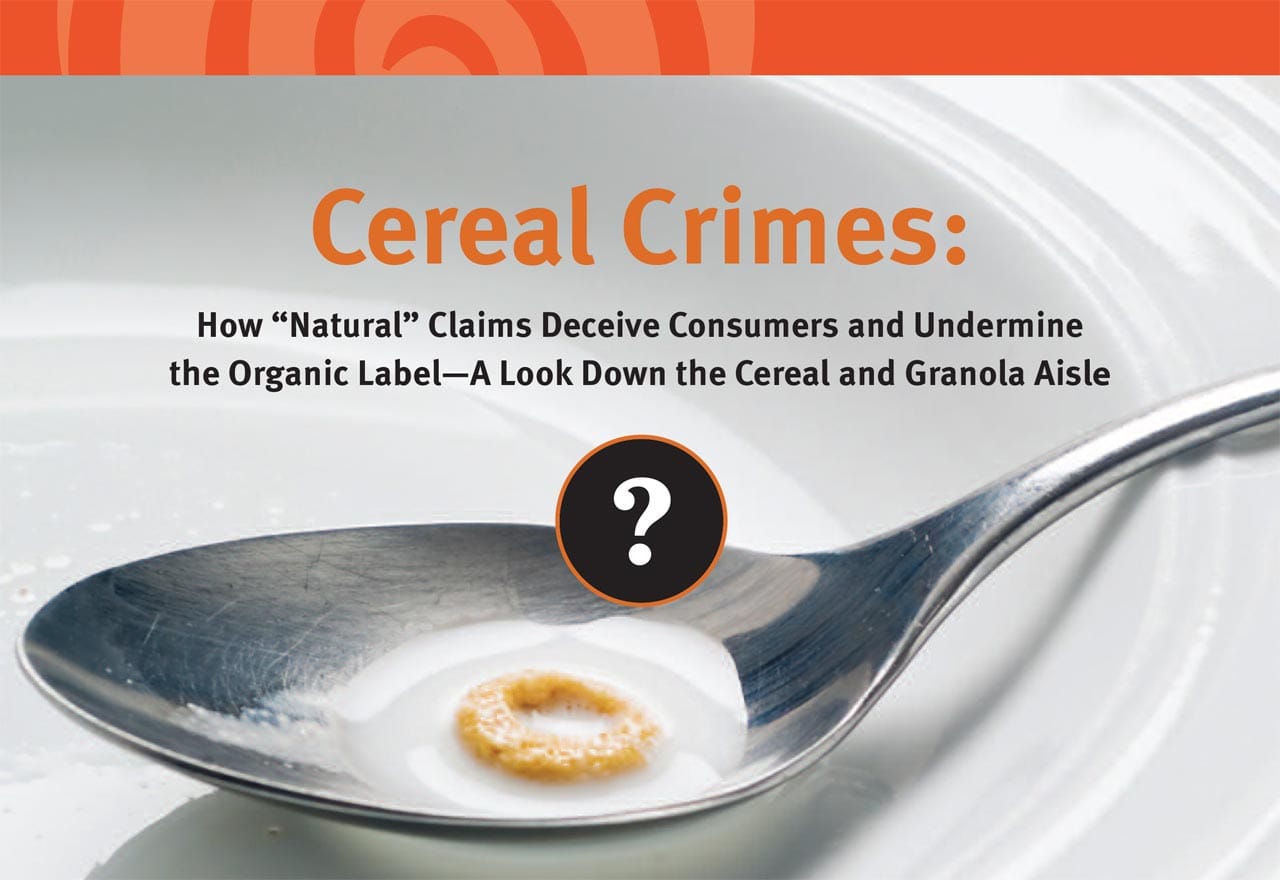
This report explores the vast differences between organic cereal and granola products and so-called natural products, which contain ingredients grown on conventional farms where the use of toxic pesticides and genetically engineered organisms is widespread.
Our analysis reveals that “natural” products—using conventional ingredients—often are priced higher than equivalent organic products. This suggests that some companies are taking advantage of consumer confusion.
To find brands that are committed to sustainable agriculture, avoiding genetically engineered ingredients and supporting organic farmers, use the Cereal Scorecard.